Three questions event organizers ask to prove results: crowding, flow and booth dwell
The three questions organizers ask about measurement, and which numbers become results you can hand back to exhibitors.
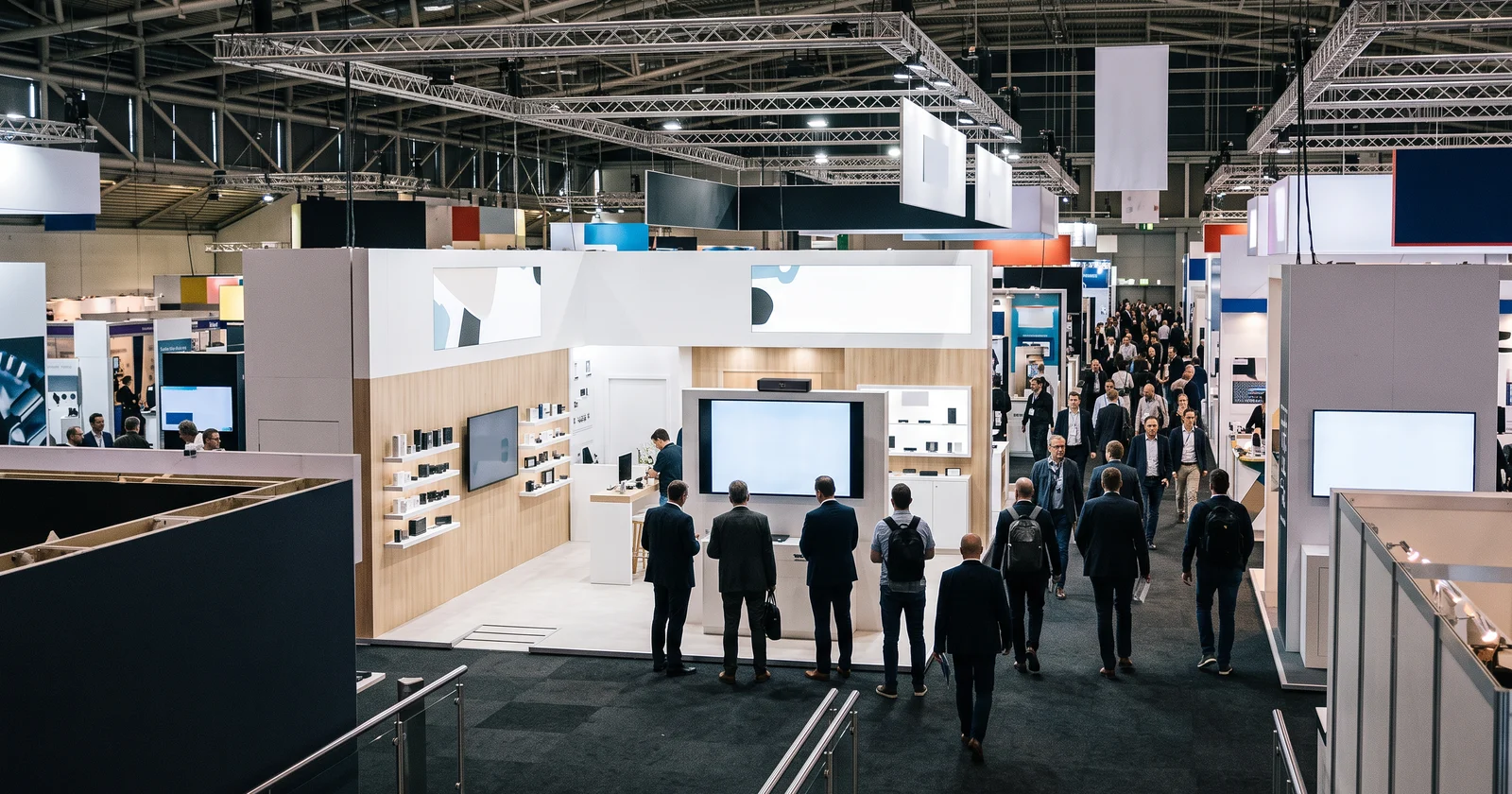
Organizers write a post-show report too. Exhibitors need a reason to come back, and venues and sponsors want proof the event ran well.
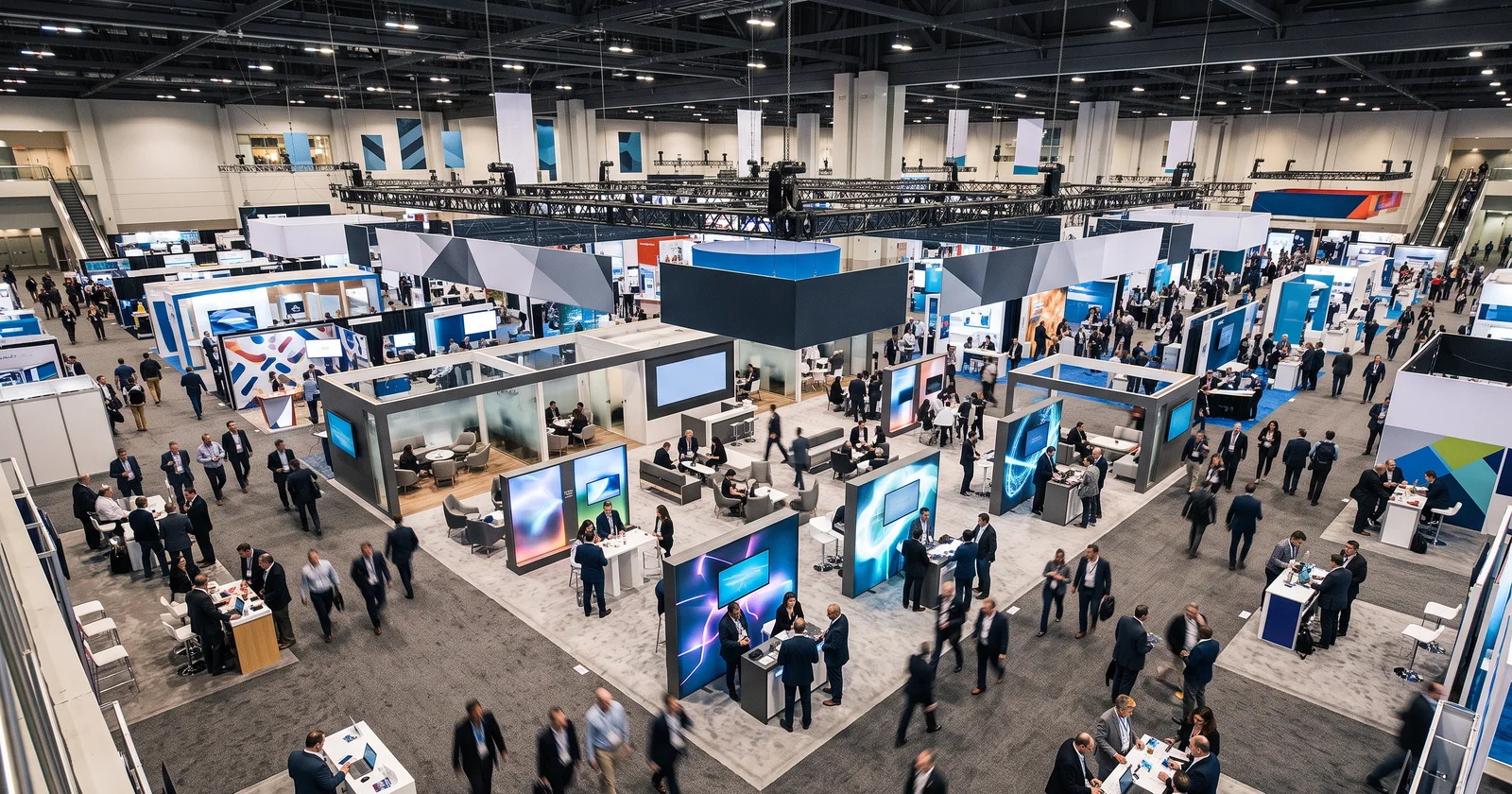
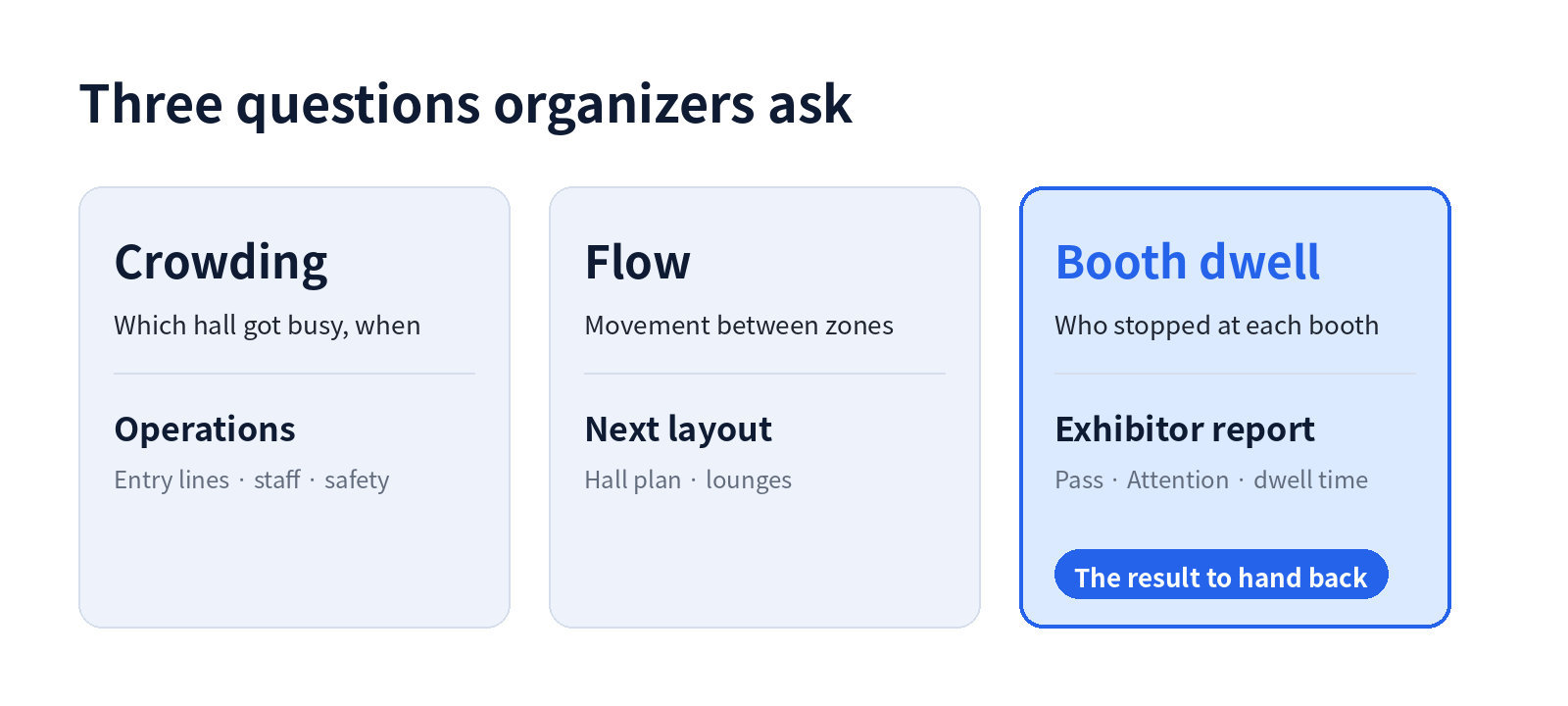
When event organizers ask us about measurement, the questions are almost always the same. How crowded was each hall? How did visitors move between halls? How long did people stay at the booths? Crowding, flow and booth dwell.
All three are fair questions, but each one serves a different job. This post separates them and shows which one becomes the result you can hand back to exhibitors.
Three questions, three different jobs
| Question | What the organizer wants to know | Where it is used |
|---|---|---|
| Crowding | Which hall got busy, and when | On-site operations: entry lines, staff placement, safety |
| Flow | Which zone visitors moved to from which zone | Next year's layout: hall plan, session rooms, lounges |
| Booth dwell | How many people stopped at a booth, and for how long | Exhibitor reporting: booth results, the decision to exhibit again |
Crowding fixes operations
A busy hall can mean many people came. It can also mean the entrance was too narrow or an aisle was blocked. That is why crowding is not a success metric. Use the busy times and spots to widen entry lines or add staff at the next show.
Flow is the basis for a better layout
Flow here does not mean following a person. Collect anonymous counts of how many people entered and left each zone by hour, and you can see which hall feeds the next one and which zones people rarely reach. If a zone stays quiet, move a session room, lounge or food area next time to change the flow.
Booth dwell is the result exhibitors need
In the end, exhibitors ask organizers one thing: did people come to our booth? Total attendance cannot answer that for any single exhibitor.
Measure three things the same way at every booth, and each exhibitor gets its own numbers:
- Pass: people who walked by in the aisle in front of the booth
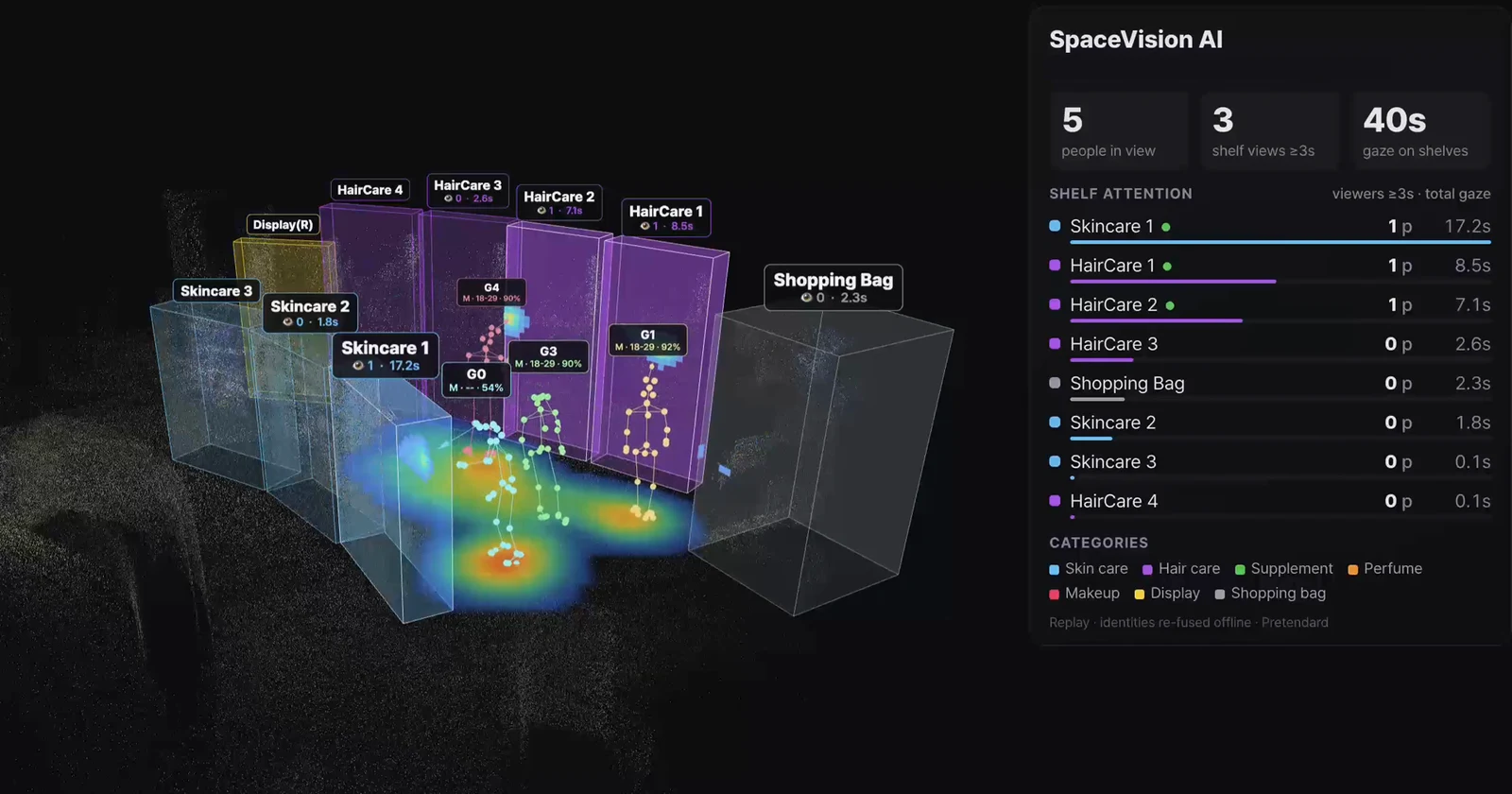
- Attention: people among them who turned their body and gaze toward the booth
- Dwell time: how long people stayed in each zone of the booth
Split by hour, the numbers also show surges, such as right after a session ends. Exhibitors learn whether the booth spend brought people in and which demo made them stop. Organizers can take these numbers into the next sales conversation.
What to put in the organizer's report
- Event overview: entry flow by hour, visitors by hall and zone
- Layout decisions: people moving between zones, zones people rarely reached
- A page per exhibitor: Pass, Attention and dwell time by zone (sent to each exhibitor)
- Operations notes: busy times and spots, what to change next time (as improvements, not results)
FAQ
Do you follow individual visitors?
No. What remains are anonymous counts, such as how many people moved through and stayed in each zone per hour. Camera video is processed inside a small analysis device on site, and only the counts go to the server. It is designed so raw video does not leave the site.
Does the venue need construction work?
No. We install for the show and remove everything after. Palm-sized slim cameras attach to booth structures or display edges. Most venues have an approval process, so we prepare a placement plan in advance.
In your next report, add a page that gives each exhibitor its own booth numbers next to total attendance. If you want to know what can be measured, get in touch.