
Which ad actually caught their eye?
We measure who sees each ad, and for how long.
Measure traffic, attention, and anonymous audience composition by digital-signage screen for campaign reporting.
A play log cannot prove the value of an ad
Retail screens deliver content, but rarely prove who actually saw it or how long attention lasted. This setup fills that gap with verified audience data.
You only know that the content was delivered.
Actual viewers and viewing time remain unknown.
Screen and time-slot value is priced on assumptions.
Industries this solution mostly serves
Audience signals become decisions about content and value
Pass, glance, and attention events connect to the content schedule. The data moves beyond the dashboard into campaign operations and media sales.
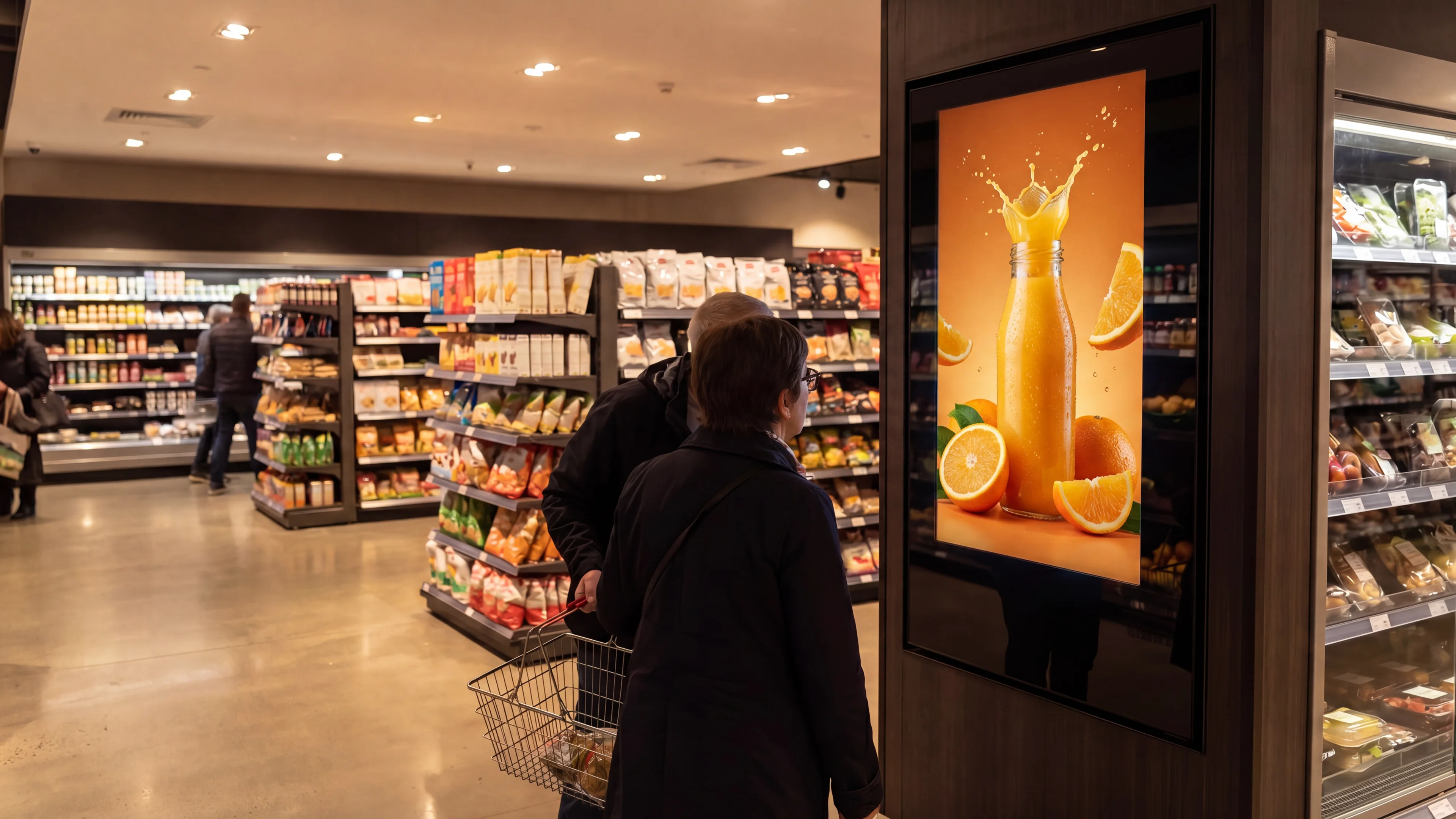
Pass · glance · attention
Measure screen-side behavior as anonymous events.
Performance by creative
Compare screens, time blocks, and content rotations.
Schedule · target · price
Decide what to run, when to run it, and how to sell it.
Report · renew · monetize
Prove performance and create the next campaign.
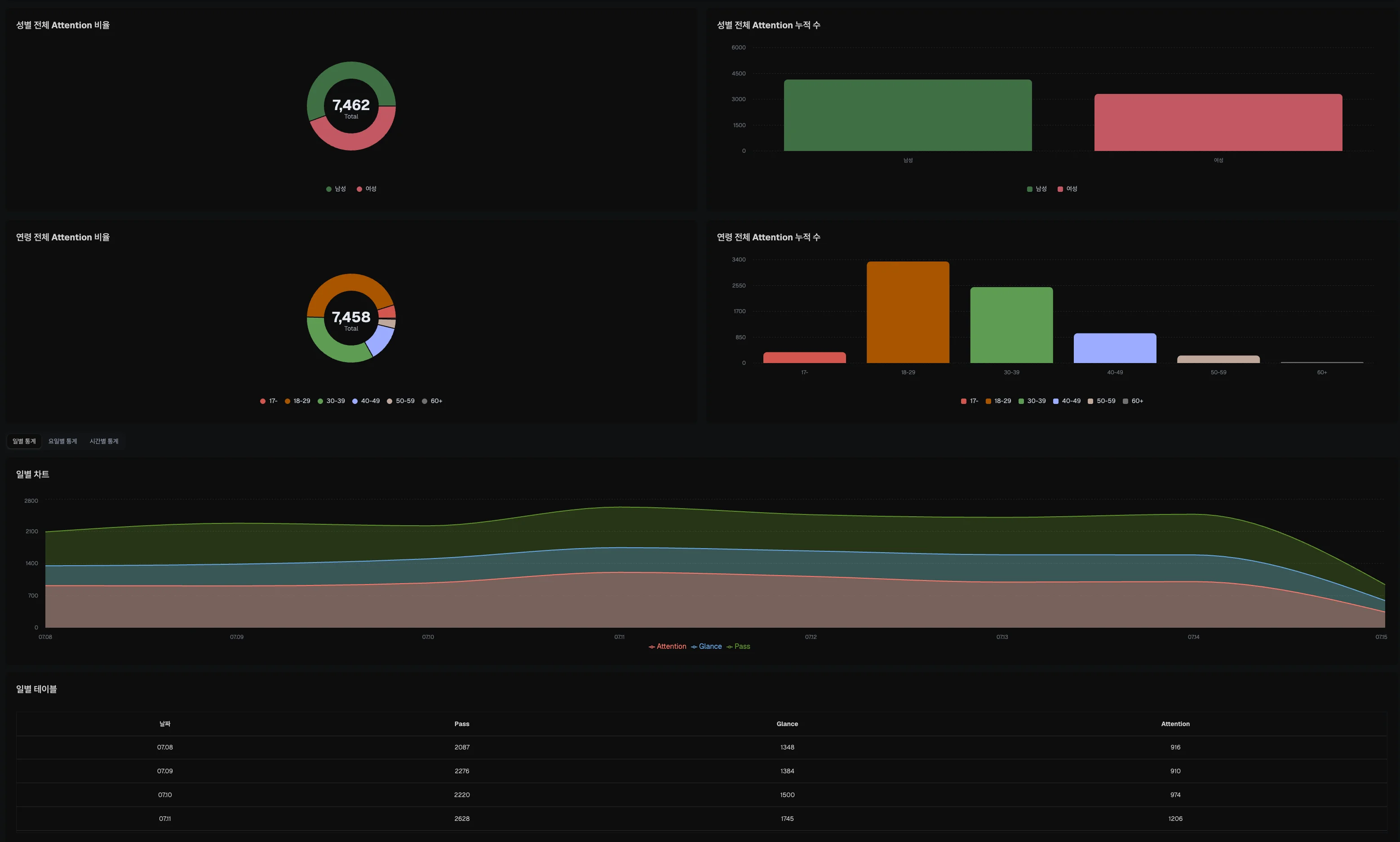
Read measured behavior at campaign level
See audience composition, daily Pass–Glance–Attention movement, and time-of-day performance for every piece of content in one operating view.
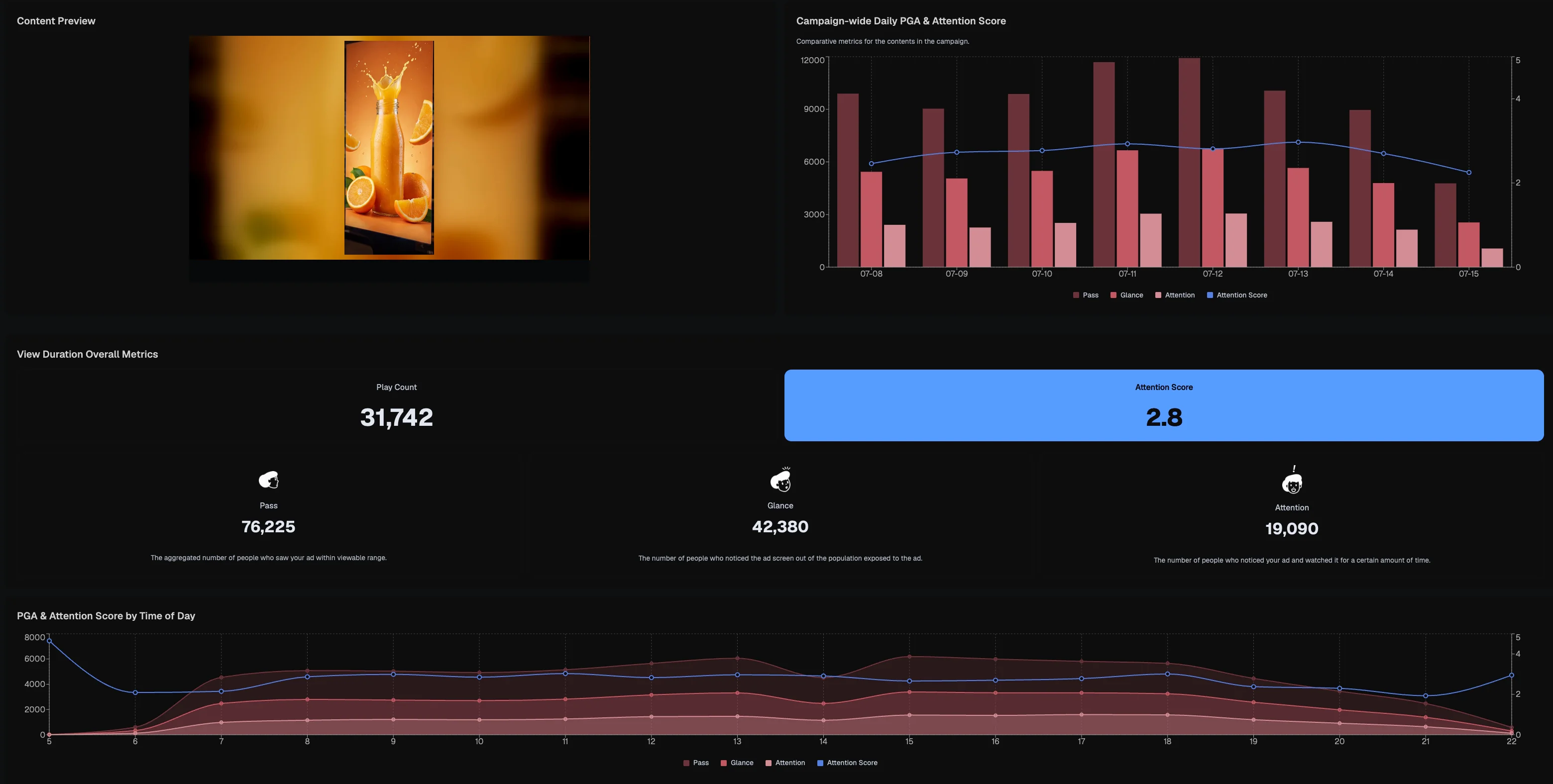
Creative performance and Attention Score
Connect campaign content, time-of-day funnel performance, and Attention Score to the next schedule.
Media and store teams work from the same evidence
Prove the audience that actually watched
Replace playback counts with verified reach, attention, and viewing time.
Repeat the content patterns that perform
Compare creative and time-slot performance to improve every rotation.
Increase the media value of every screen
Use performance records to support inventory pricing and advertiser renewal.
Verified viewing and attention data prove each screen's advertising performance
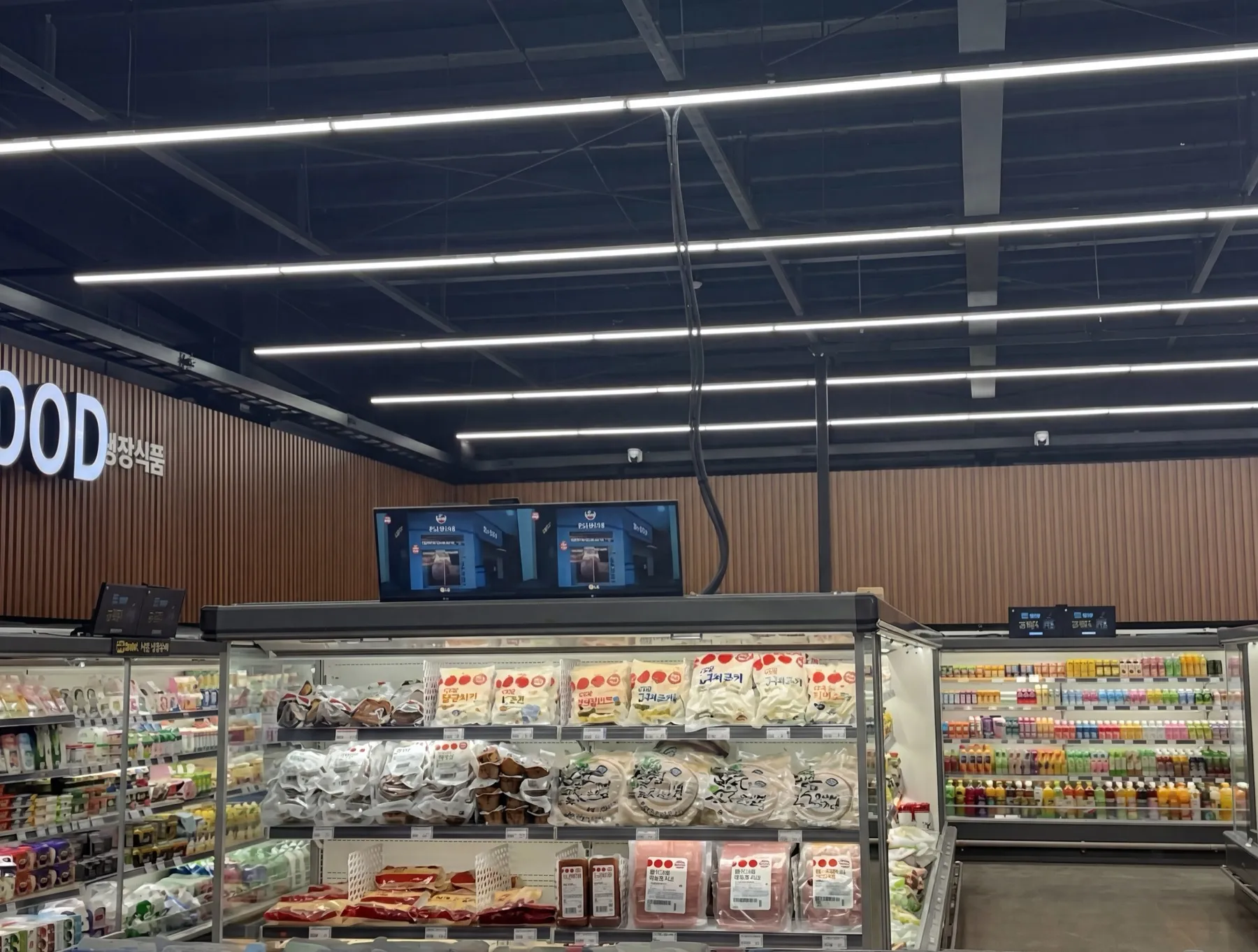
The network measured 35,000 monthly ad-attention events. Campaign-slot sales grew 5×, leading to a full 13-store rollout.
Add a measurement layer to the screens you already operate
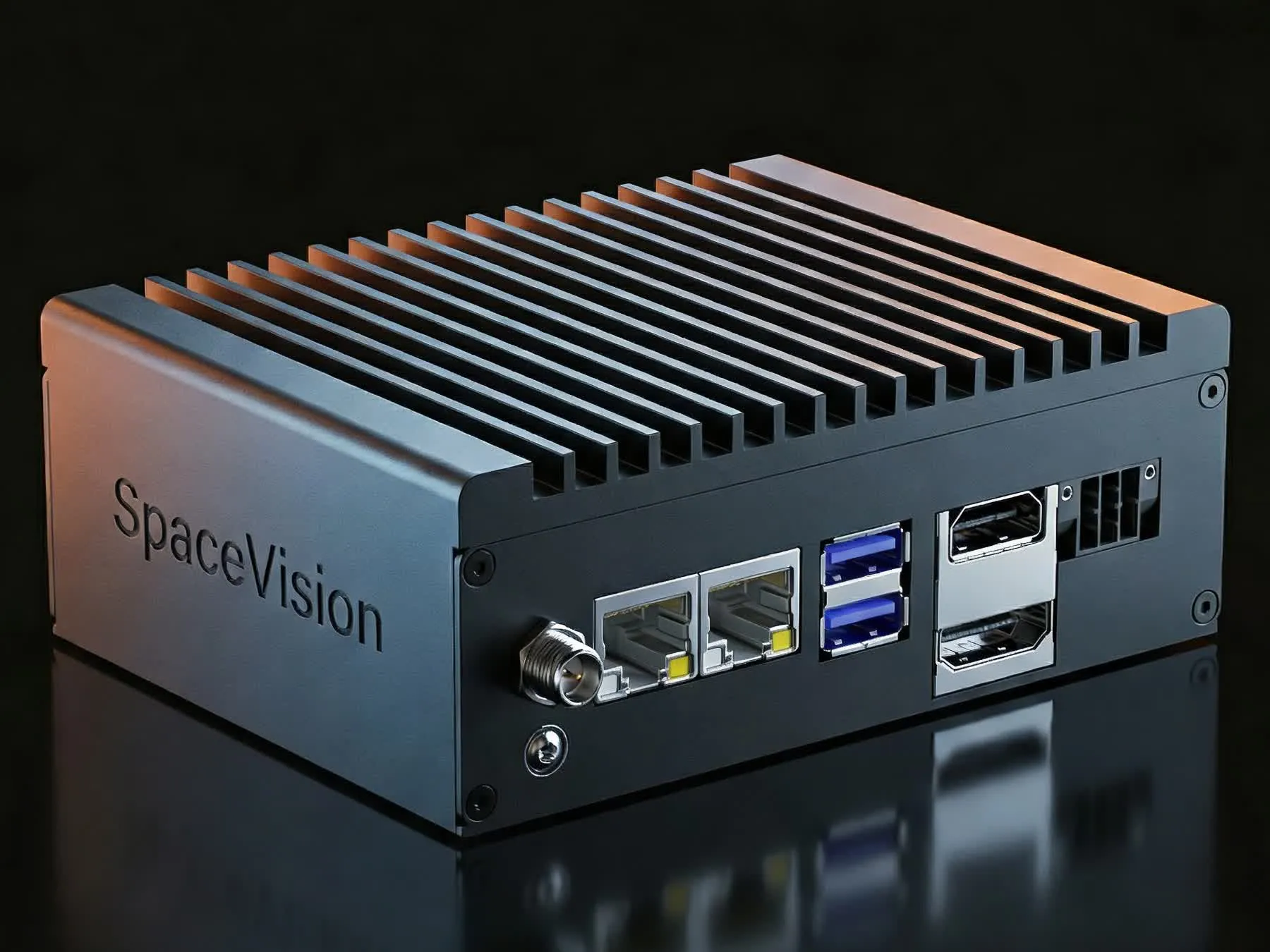
The camera and AI Box process and discard video on site. Only anonymous campaign events and aggregates reach the cloud.
Screen and camera
Connect an existing signage camera or add one where measurement is needed.
On-device analysis
Analyze head and gaze direction locally without storing source video.
CMS and dashboard
Join content schedules with audience signals to produce campaign performance.
What teams ask before deployment
Q01How is attention measured?+
Not by recognising faces, but by estimating where the head and gaze are pointed. No facial recognition is used and no biometric data is stored, so who stood in front of the screen is never recorded anywhere.
Q02Does any video leave the store?+
None. Video is processed inside the on-site device (AI Box) and erased immediately. Only anonymous aggregate numbers leave the store — we cannot see the original footage either.
Q03Will installation disrupt store operations?+
There is no construction. A small device is added beside the screen and camera, and installation and upkeep are handled for you. Work is scheduled outside trading hours, so the store never has to close.
Q04Can it also run the ad content?+
Yes. A content scheduling system (CMS) is included, so different content can play according to the gender and age band of whoever is in front of the screen. If you already use a scheduling system, we integrate with it.
Q05What is the minimum measurement period?+
We work in campaign terms. Comparing performance between pieces of content takes at least a month; reading time-of-day and weekday patterns reliably takes longer. A few days is not enough to build a case for scheduling or rate-setting.
Q06Can the results be shown to advertisers as they are?+
Yes. We break down, screen by screen, how many people passed and how many actually watched. You can price the placement with numbers, and advertisers get the grounds to book again.
Q07Can stores be compared when their environments differ?+
We align the metrics and measurement zones on one standard first, then correct for each store's camera view and data quality. Low-light or obstructed areas are filtered out in the pre-install survey, and we tell you upfront how far the data can be trusted.
Q08How is pricing decided?+
By the number of screens, the measurement period and the installation work. The more screens you want read separately, the more cameras and on-site hours it takes. Send us the number of stores and where the screens sit, and we will come back with a setup and a quote.
See what your current screen network can measure
We scope a pilot and measurement plan around your screen locations and camera environment.