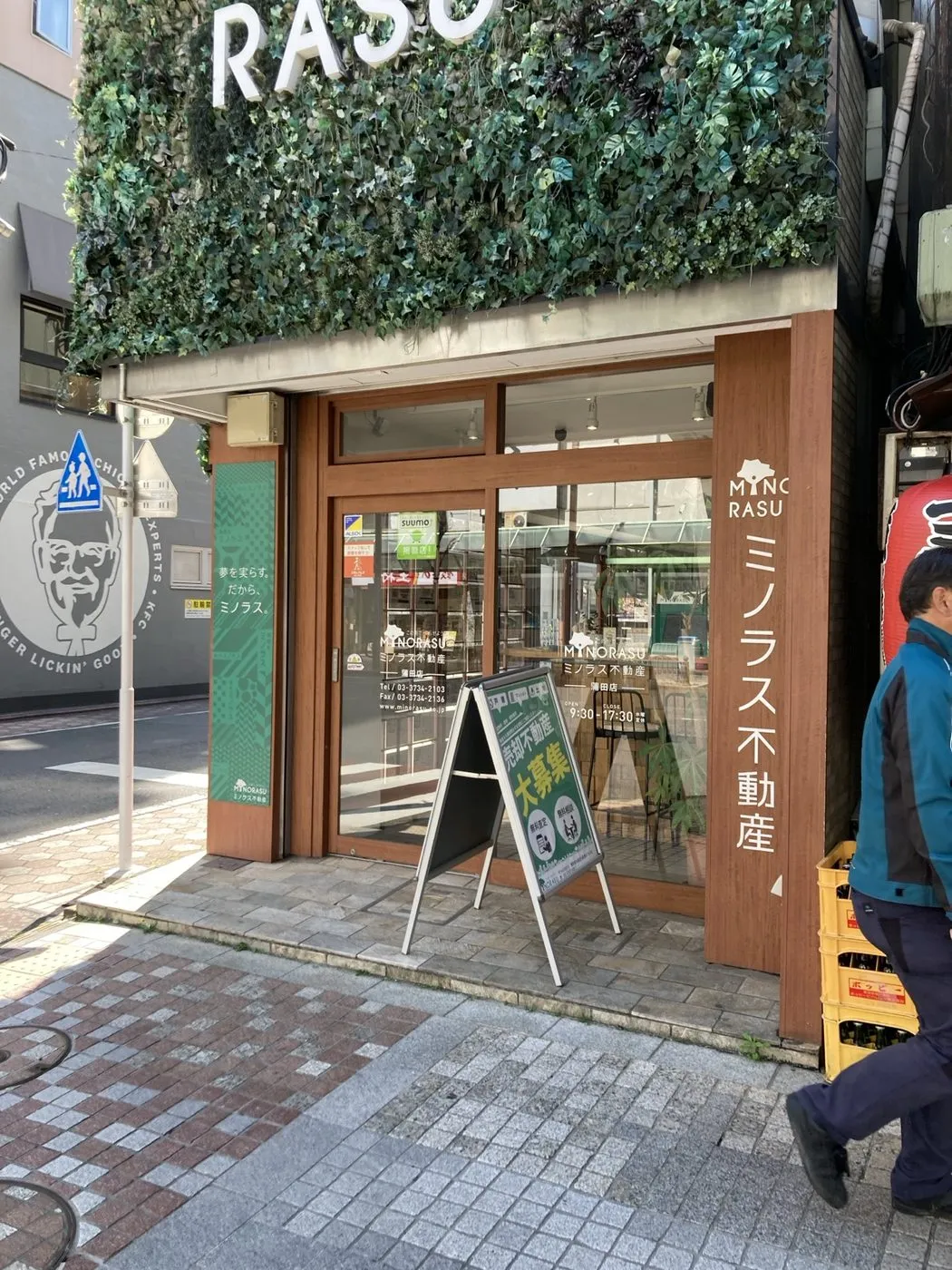
An illustrative view. In practice no footage is stored, and no one is identified or re-identified.
Data from one test store confirmed a six-store rollout
Measuring storefront traffic, attention, and entry conversion confirmed that signage brings people in, turning a one-store test into a six-store rollout.
Rollout confirmed after the test data was verified
Uptime through the measurement period
No way to measure what the storefront was doing
MiNORASU, a real-estate agency in central Tokyo, had no way to measure what its storefront was doing. The team assumed signage brought more people in, but had no grounds to say which content actually led to an entry. Whether to add signage in more stores came down to impression rather than data.
Two cameras measuring attention and entry per display
SpaceVision installed two measurement cameras covering the full storefront and its promotional displays. They measure traffic, attention rate, and entry conversion by display and by hour, linking anonymously who passed, who stopped to look, and who came in. Video is processed inside the on-site device and erased immediately; only anonymous aggregates leave the store.
Verified performance turned one test into six stores
The storefront traffic, attention, and entry-conversion data confirmed a rise in visits after the signage went in. Measurement held 99.9% uptime throughout. On that basis MiNORASU expanded from a single test store to six.
Measured storefront performance became the basis for the rollout decision
Linking visits
See which displays and which content actually lead to people coming in.
Rollout decisions
Weigh traffic, attention, and entry conversion to decide signage store by store.
Scheduling
Compare performance by display and by hour to rebuild the storefront content.
Want the same data for your space?
Tell us the space and the period you want measured, and we will map out which metrics we can deliver first.