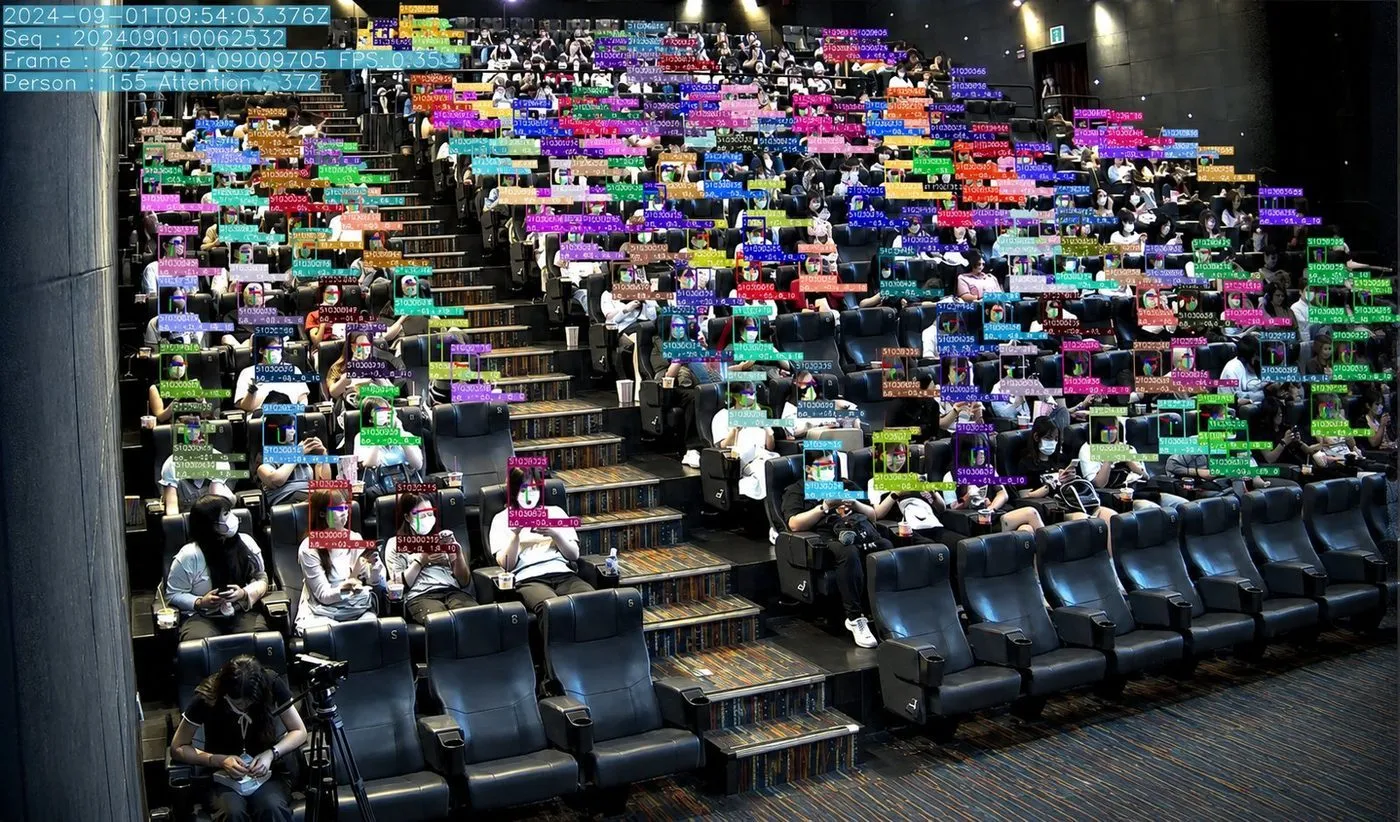
An illustrative view. In practice no footage is stored, and no one is identified or re-identified.
Who saw which ad, proven across 96% of all screenings
Matching entry timestamps to ad screening times (94% match rate) connected audiences to the ads they saw. 96% of all screenings now carry verified data.
Entry-timestamp match rate
Screenings carrying verified data
They knew the audience was in the room, not who saw the ad
Megabox is a leading Korean cinema chain with 115 theaters and 767 screens nationwide. It knew audiences were in the room, but could not verify who among them saw the ad. With no way to connect ticket sales to ad exposure, arguing premium rates to advertisers was difficult.
Entry timestamps matched to ad screening times
SpaceVision installed ScreenVision at cinema entrances nationwide. On-site devices match entry timestamps to ad screening times and record age, gender, and attention per screening. Measurement holds to the same standard in a dark auditorium; video is processed inside the on-site device and erased immediately, and only anonymous aggregates leave the site.
96% of all screenings carry verified data
A 94% entry-timestamp match rate connected audiences to the ads that ran at that time, and 96% of all screenings ended up carrying verified data. With audience-level verification in place, strong time slots turned into ad renewals and upsell, and premium rates could be argued from real evidence.
Audience-level verification became the basis for premium ad rates
Audience-level proof
Match entry times to screening times, connecting audiences to the ad that ran.
Grounds for renewal
Strong time slots turn into ad renewals and upsell.
Premium rates
Explain premium ad rates with audience-level verification data.
Want the same data for your space?
Tell us the space and the period you want measured, and we will map out which metrics we can deliver first.