Self-checkout loss: one prompt gets more than 80% to fix it
Findings from the Self-Checkout Loss Report 2026 (June 2026), based on 39 retailers, suggest the key to cutting loss is not suspecting shoppers but finding the moments that need a check.
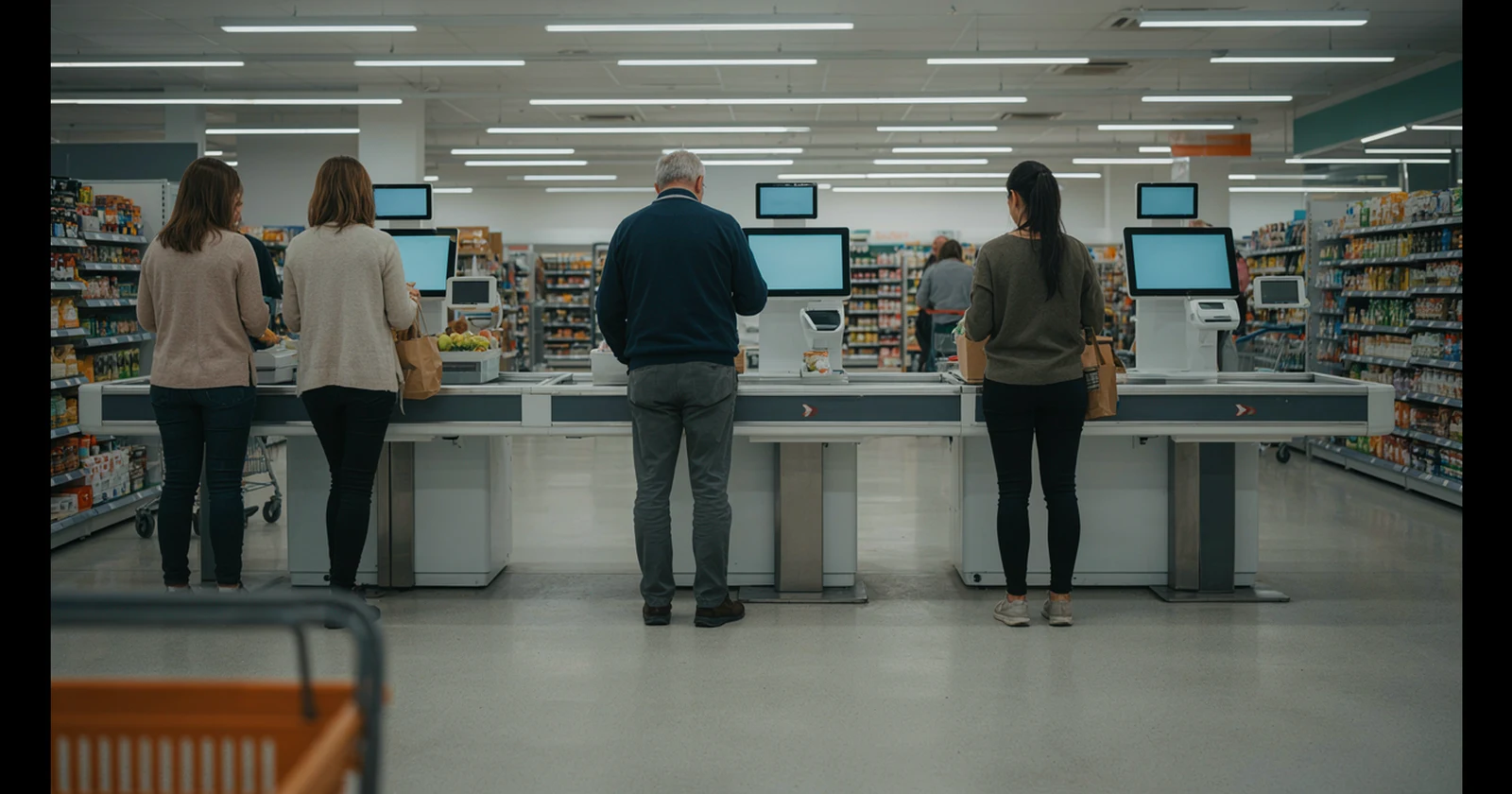
Self-checkout brings more loss. In a study pooling data from 39 retailers, store losses rose 22% on average in the first year after self-checkout went in. The same study also points to a fix. The most common loss is a missed scan, not a deliberate one, and when shoppers are asked on screen to check again, more than 80% fix it themselves.
This post summarizes the public findings of the Self-Checkout Loss Report 2026 (June 2026), led by the University of Leicester and commissioned by ECR Retail Loss. The 39 participating retailers have a combined annual turnover of more than €1 trillion. All figures come from the report and ECR Retail Loss, not from our customers.
The numbers
- 54% of store transactions now go through self-checkout. It is no longer a side lane but the main way to pay
- Losses rose 22% on average in the first year of self-checkout
- Missed scans are the most frequent loss, in 1% to 4.8% of transactions, at €2.50 per incident on average
- On-screen prompts to check or rescan led to self-correction in more than 80% of cases. Data from two retailers in the full report put it at 80% to 97%
Prompts work. Knowing when to prompt is the hard part
Prompts are effective. A simple on-screen request to check again, without putting anyone on the spot, gets most shoppers to fix the mistake. What remains is deciding when, and on which transaction, to show it. Miss the moment a scan is skipped and there is nothing to prompt. Prompt on a clean transaction and you only annoy the shopper.
This is where retailers are stuck. Their estimates of how much loss is theft range from 6% to 80%, and they say they struggle to tell malicious from accidental non-scans. The report concludes that the methods retailers use to estimate intent are not reliable.
What current technology misses
The report also gathers results from loss prevention technology tested in stores, but the evidence is thin. Of 14 companies that tested missed-scan identification, seven reported positive findings, and the report itself says the results need caution because there are few evaluation studies.
Accuracy is the sticking point. ECR Retail Loss notes that weight checks can generate a considerable number of false interventions, and that early video systems often produced false positives and negatives (while noting providers say accuracy has much improved). With as many as 50,000 different items in a store, recognizing every product is hard to get working in a complex environment.
Staff are stretched too. Self-checkout hosts surveyed for the report felt there were not enough staff to monitor the area, and staff reaction times were on average 2.27 seconds slower due to the extra workload.
In short, the modest results do not mean checks are unnecessary. They reflect tools that cannot yet pick out the right moments to check.
Reducing self-checkout loss
- See where it leaks. Missed scans, product look-up errors and walkaways differ in frequency and cost. In the report, look-up errors occurred in 0.18% to 0.2% of transactions, and walkaways were rare but cost €88 per incident on average
- Prompt at the right moment. The effect of prompts is already clear. What matters is catching the transactions with a missed scan and leaving clean ones alone
- Watch hand movement, not products. A camera above the checkout that follows hand and product movement instead of identifying each item is less thrown by new products or display changes
- Focus staff on what needs checking. Match hand movements seen by the camera with checkout scan records and flag only the gaps, so staff do not need to watch every lane. Nothing blocks payment automatically or singles anyone out. Staff make the final call
FAQ
Which countries does the study cover?
The public release does not list the countries of the 39 retailers. Figures combine retailer cases, so they will not fit every store as is.
Do you recognize faces?
Our self-checkout loss prevention solution does not use faces or biometrics. It looks only at hand and product movement above the checkout.
The first step in cutting loss is not deciding whom to suspect but finding the right moment to prompt a check. Get in touch if you want to look at your self-checkout loss together.