Why to measure foot traffic at a site before you open there
New store locations are usually chosen from a few site visits and area statistics. Here is what you can compare on the same basis by measuring foot traffic in front of each candidate site for several days.
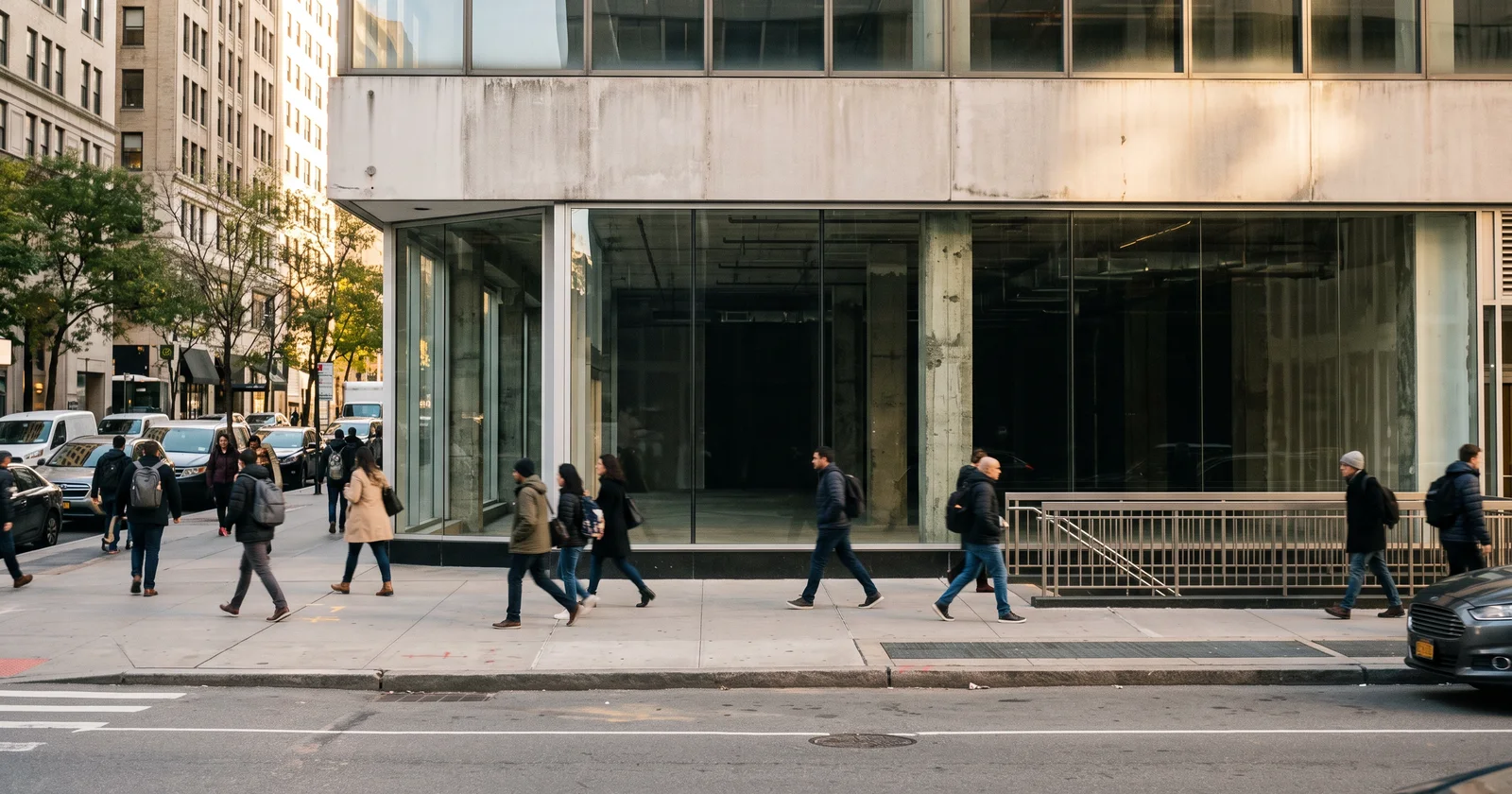
When choosing a location for a new store, the first thing you hear is "a spot where lots of people walk by." But that judgment of "lots" is usually based on a few site visits and area statistics. The street you saw on a Tuesday lunchtime can look completely different on a Saturday evening.
This post covers how to measure foot traffic in front of a candidate site directly, and how those numbers let you compare locations.
What location decisions are based on today
Store opening reviews usually rely on three kinds of evidence.
- Site visits: someone goes a few times and makes a call. The day and time of the visit shape the impression
- Area statistics: foot traffic estimates for a district or trade area. They show broad patterns, but not the traffic right in front of a store, which can change from one building to the next on the same block
- Existing store results: sales from stores in similar locations. You still have to judge how similar the new site really is
What is missing is how many people actually walk past that exact spot, and how that flow changes by day of week and time of day.
Measuring foot traffic in front of the site
A wireless measurement kit is placed at the candidate site and counts passersby for several days. The kit holds a camera, an on-site analysis device and an LTE router, so it can measure even in a vacant unit with no internet line. It attaches to the glass or an awning and only needs power.
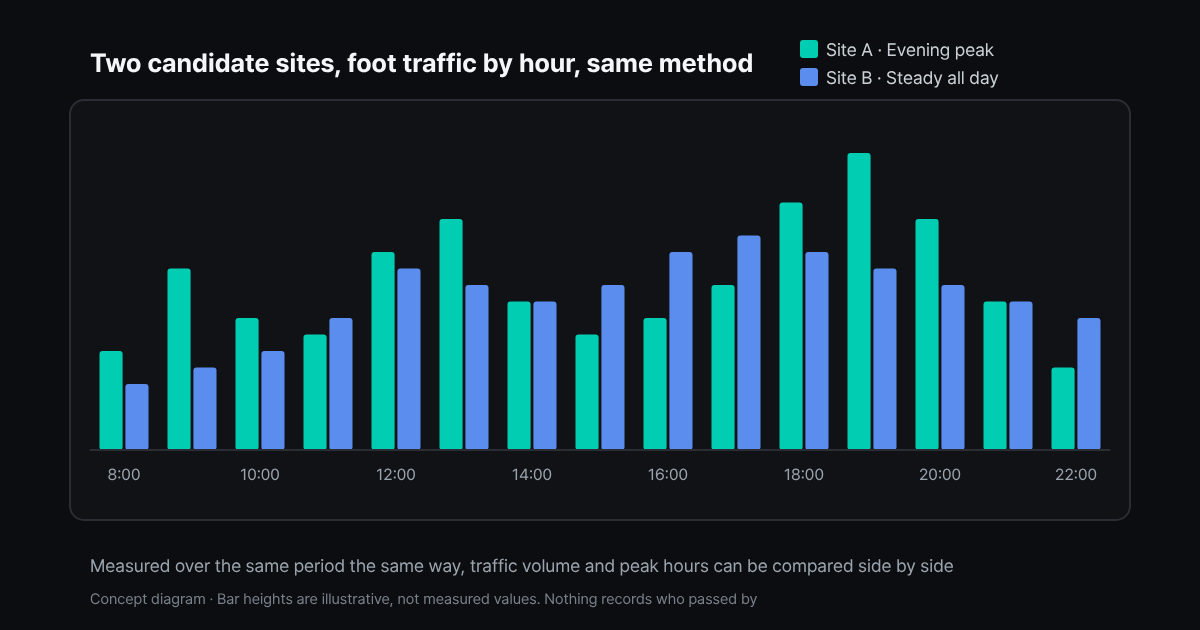
The measurement gives you four things.
- Foot traffic: the number of people who passed the spot, by direction and by hour
- Day and time patterns: the difference between weekdays and weekends, and between the morning commute and the evening
- Passerby mix: the gender and age group distribution of passersby, as anonymous aggregates
- Site comparison: numbers measured the same way, so candidate sites can be placed side by side
Video is processed inside the on-site device, and the system is designed so that only hourly aggregated counts are sent out. Nothing records who passed by.
Questions these numbers can answer
- Do our customers walk past here? High traffic means something different if few people from your core customer group pass by. The passerby mix answers this
- Does the traffic match our opening hours? The time pattern shows whether a site suits a lunch business or an evening one
- Which of two sites is better? Compare them with numbers measured over the same period on the same basis, not with impressions from site visits
- Can we change the business at our current location? Even at a site you already run, measuring traffic in front of the store again gives you a basis for reviewing the next type of business
How long to measure
To see weekly patterns, about a week is recommended. A single day is heavily affected by that day's weather or events. To see seasonal shifts or changes in the area, measure over several months. If there are several candidate sites, the kit can be moved from one to the next and measure each in turn on the same basis.
Frequently asked questions
The unit is vacant with no internet. Can you still measure?
Yes. The kit includes an LTE router, so data is sent without a separate line. It needs one standard power outlet.
Is it acceptable to film passersby?
Video is processed and deleted right away inside the on-site device. Only anonymous aggregates, such as hourly foot traffic and passerby mix, are sent out, and the system does not identify specific people.
Measure the traffic in front of a site for a few days before signing, and a location choice that used to rest on instinct can be compared in numbers. See TrafficVision for the full setup.