How to use security CCTV to decide store layout
Most stores already have CCTV but only review it after an incident. Here is what you can base display and layout decisions on once that footage becomes visit and dwell counts by zone.
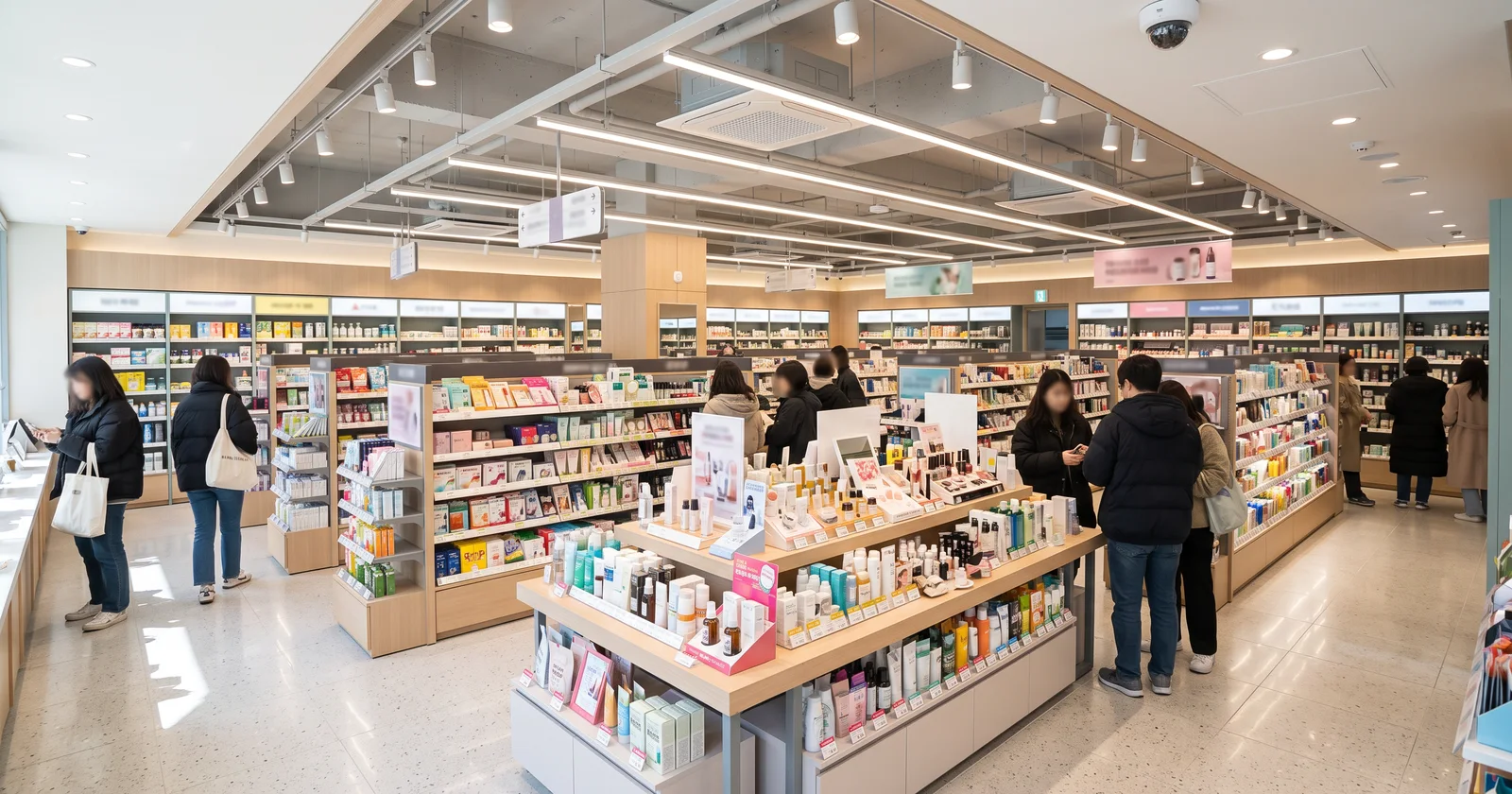
Most stores already have CCTV cameras on the ceiling. The footage only gets reviewed when something goes missing or an accident happens. It captures movement in the store all day, yet it is rarely used when deciding displays or layout.
This post covers how existing CCTV footage can be turned into counts by zone, and which store operations questions those counts can answer.
What store layout is decided on today
When a display changes or a fixture moves, the basis is usually one of two things.
- Sales: results take weeks to show, and it is hard to separate the effect of the layout from season or promotions
- Gut feel on the floor: what store managers and staff notice matters, but it is hard to compare across stores on the same basis
Where shoppers walk and where they stop in the store is information that comes before sales. Without it, you have to wait for sales to see whether a layout worked.
Turning CCTV footage into counts by zone
The store is divided into a few zones, and the CCTV footage is used to count how many people passed through each zone and how long they stayed.
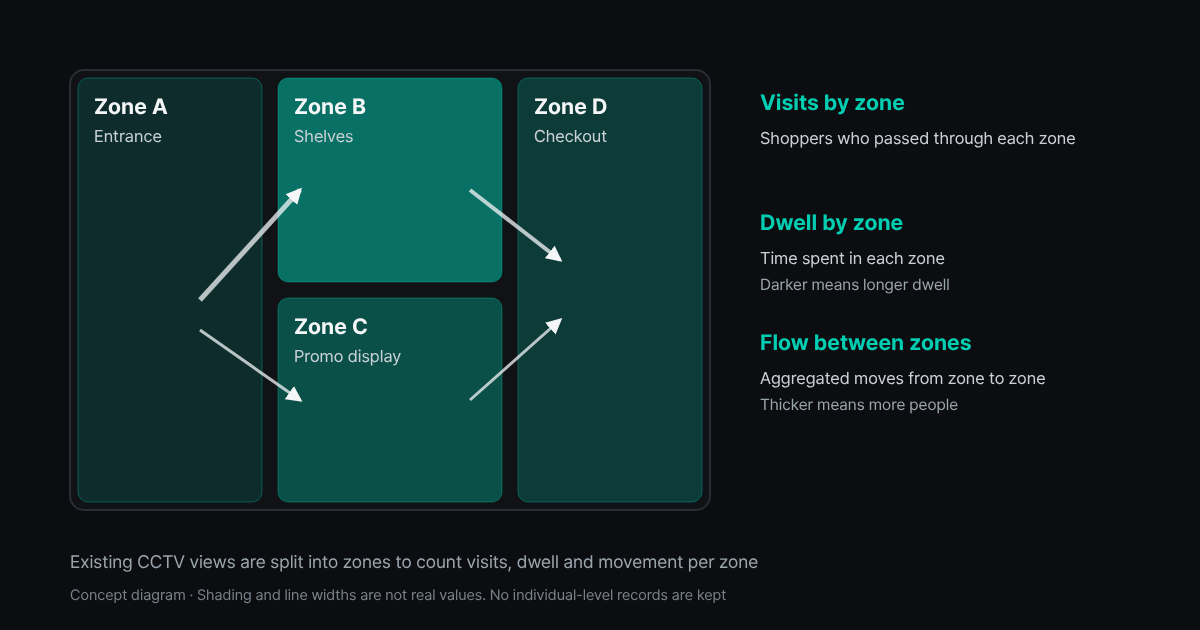
- Visits by zone: the number of shoppers who passed through each zone, by hour
- Dwell by zone: time spent in each zone. As a heatmap, it shows at a glance where shoppers gather and where the floor stays empty
- Flow between zones: aggregated views of which zones shoppers head to from the entrance, and which zones they pass through on the way to checkout
Video is processed on a device in the store, and the system is designed so that only aggregated counts by zone are sent out. A shopper's movement is linked only within that visit and ends when they leave the store. Nothing records whose movement it was, only how many people stayed in which zone and for how long.
Questions these counts can answer
- Is this display where shoppers actually walk? If a key product sits in a zone with few visits, start by reviewing its display position
- Did the layout change work? Compare visits and dwell by zone before and after the change to see the response before sales come in
- What differs from store to store? Compare several stores on the same zones, and you have grounds to bring the layout of a strong store to the others
- When do we need people on the floor? See the busy hours for each zone and set staffing and restocking times around them
What existing CCTV can and cannot do
Whether existing CCTV can be used depends on resolution, angle, frame rate and how the cameras are networked. Footage from the site is checked before installation.
Most CCTV is mounted for security, looking down over a wide area. That angle suits counting visits and dwell by zone, but it makes it hard to tell whether a shopper looked at a particular shelf or screen. To measure gaze and attention, a small dedicated camera is added at that spot.
Frequently asked questions
Do we need to install new CCTV?
If the conditions are right, the existing CCTV footage is used as it is. Dedicated cameras are added only for zones where the footage does not meet the conditions.
Do you track each shopper?
No. What remains are aggregated counts, such as how many people passed through each zone and how long they stayed. The system does not identify specific people or follow returning shoppers.
CCTV already watches the store all day. Turn that footage into counts, and you have one more basis for layout decisions.